
In Our Model, Learning Happens Through “Doing,” Experience, and Projects
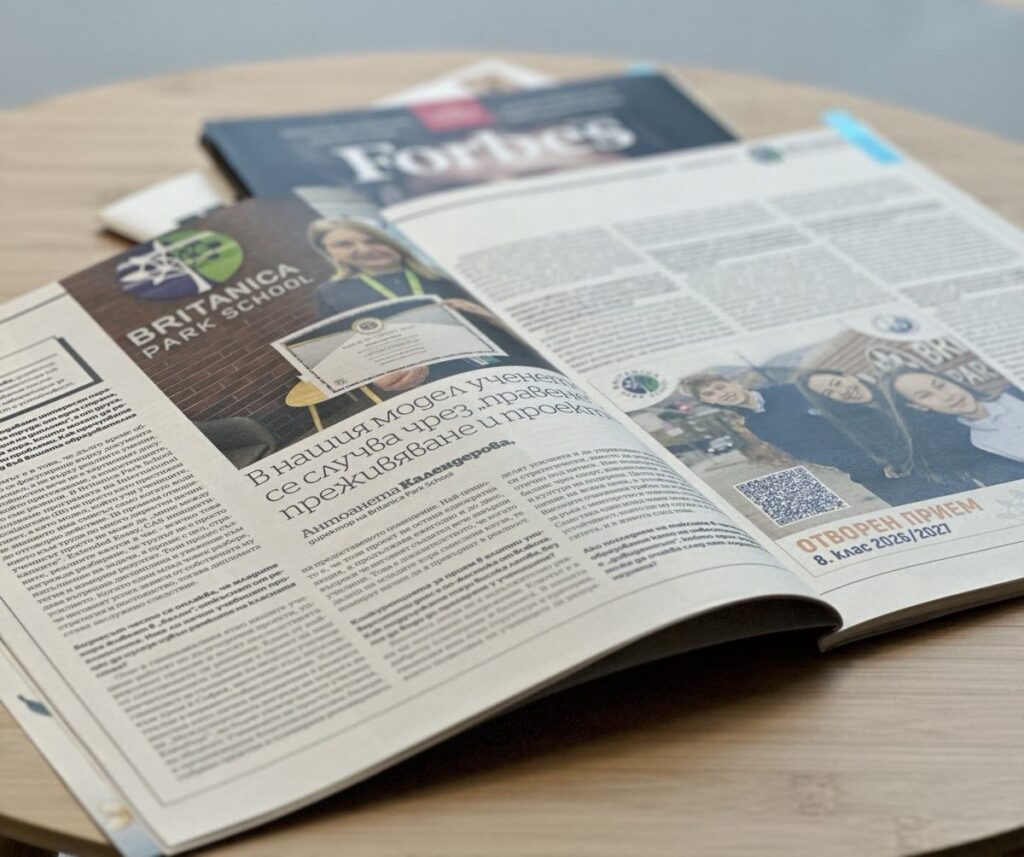
Antoaneta Kalenderova in Kapital's special "Education" issue
Right now we're seeing an interesting paradox in the labor market: on one hand, there's "diploma inflation," and on the other, an acute hunger for people who can solve real problems. How do you address this trend in your educational environment?
The problem is that for a long time, society focused on the document as an end in itself, rather than on real skills. Today, what has value is no longer the piece of paper we hold, but the competencies we've developed. At Britanica Park School, we use the International Baccalaureate (IB) programme not simply as a prestigious label, but as a model that teaches students that knowledge only has meaning when it leads to responsible action. IB changes one's relationship with work in a very direct way: a student simply cannot "slip through the cracks." The Extended Essay, CAS initiatives, real case studies in class – all of this builds an understanding that work isn't just about completing a task, but a process with purpose, strategy, and a measurable outcome. This process builds inner discipline and respect for effort. When a young person understands that their success depends on their own strategy and persistence, then the diploma becomes a well-earned consequence.
Businesses often complain that young people live in a "bubble," disconnected from reality. Is there a way for the learning process to step outside the classroom walls?
Starting as early as the high school stage, our students work on long-term projects, manage deadlines, and bear the consequences of their own decisions. One of the most impressive examples is a project by one of our high schoolers to create a Sunday school at a temple in Sofia, aimed at intellectually disadvantaged individuals. The idea began as a personal initiative within the "Duke of Edinburgh's International Award," but quickly drew in the entire school community. The students didn't just dream – they organized charity bazaars, raised funds, and planned the renovation of the space provided to them. Most valuable of all, this project didn't remain a one-time effort; it continues every year to this day, even though its creator has already graduated. This is proof that when you give young people a meaningful cause, they find a way to make it a reality.
Competition for admission to elite universities today is fiercer than ever. How do you maintain such a high bar without it leading to student burnout?
A high bar doesn't necessarily mean constant pressure. The key lies in good planning and balance. Our high school has a clear structure and criteria, which allows students to distribute their efforts and manage their time strategically, rather than reacting chaotically under pressure. We maintain this balance through sports, extracurricular activities, and a culture of support. Our goal isn't exhaustion at any cost, but sustainable growth. High expectations must go hand in hand with mentorship and a human touch. Only this way can a young person build the kind of resilience that will serve them both at university and in life afterward.
If we look at private education fees as an investment, what "dividend" can a parent expect after five years in high school?
The dividend is a young person who knows their strengths and has clearly defined goals. After five years, the parent doesn't just get a student with a prestigious university admission – they get a mature individual with inner resilience and direction. This is a person who can make conscious choices, withstand negative pressure from their environment, and show genuine care for the world they live in.
You often say that in high school, students find not just friends, but future business partners. How do you foster a culture of partnership in an environment of highly ambitious individuals?
Ambition and collaboration aren't mutually exclusive – on the contrary, they complement each other. When people with different interests and perspectives come together on a task, the end result is of higher quality. Our students work on joint projects every day that require real coordination. They learn to divide roles, respect others' opinions, and share in success. Our Alumni Club reinforces this culture, creating a network of partnerships that extends beyond the school years. This is how friendships often turn into future professional collaborations.
Middle school is often the moment when children either fall in love with learning or become permanently disengaged from it. How do you manage to preserve their curiosity?
Children naturally love to learn and discover. The problem arises when learning becomes too abstract and detached from life, and the child feels lost or unsupported. In our model, learning happens through "doing," experience, and projects. When a student understands "why" they're doing something, their motivation is naturally sustained. Meaning and active experiences keep natural curiosity alive. That's why we give our middle schoolers the opportunity to develop their own interdisciplinary projects, to make connections between knowledge across different subjects, to discover the concepts behind various phenomena, and to see the bigger picture.
Everyone talks about soft skills, but how are they actually cultivated in practice, starting from the earliest age?
Soft skills aren't taught through lectures – they're cultivated through the environment. It's an environment that doesn't stigmatize mistakes, but instead encourages reflection and a second attempt. The process builds progressively: if in first grade children learn to work in pairs, by sixth grade they're already able to reflect on themselves and give feedback to their partners. By tenth grade, they're ready to take on a leadership role and run a real event for the entire school community.
Kindergarten is often seen simply as "a place to play." What is its role in shaping the future adult?
Kindergarten is a place to play, but the key question is: "What kind of play?" Play is a natural, active way of learning – it provides a structured environment in which the child begins to understand themselves and the world around them, and to develop their creativity. What matters is the choice of context and rules, the observation of the process and interactions, and, above all, the conversations that follow the play. It's precisely then that patterns of behavior and attitudes toward the world are reinforced. Through active participation, experience, and reflection, the child begins to understand cause-and-effect relationships, ask questions, and seek solutions. The experience gained during these early years determines whether, a decade later, the child will face challenges with fear or with curiosity.
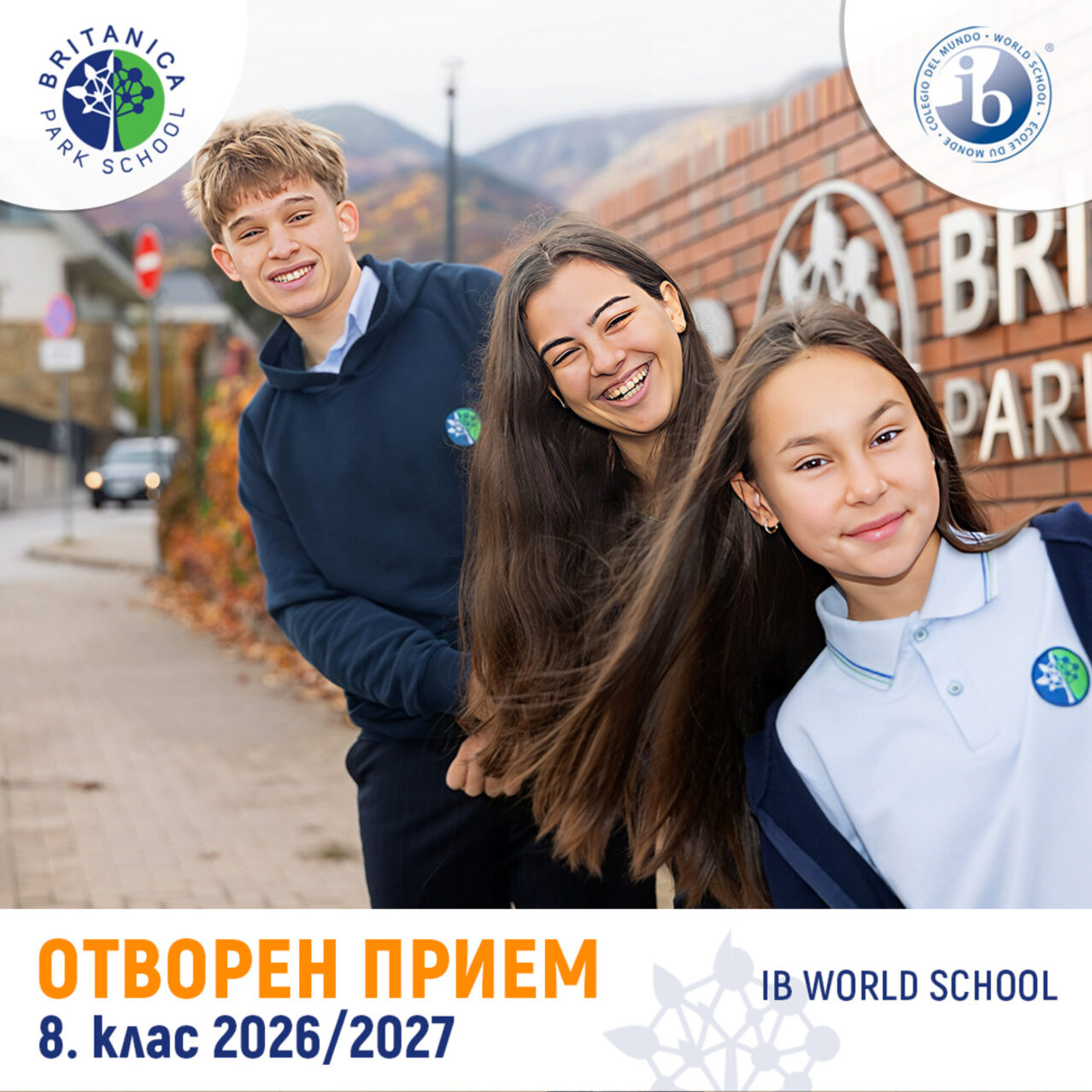
Investing in quality education today is the surest tool for building sustainable human capital tomorrow. For parents and students seeking an educational environment focused on international standards and personal growth, admissions to the high school stage of Britanica Park School for the 2026/2027 academic year are now open.