
The Teacher Who Conducts with a Smile
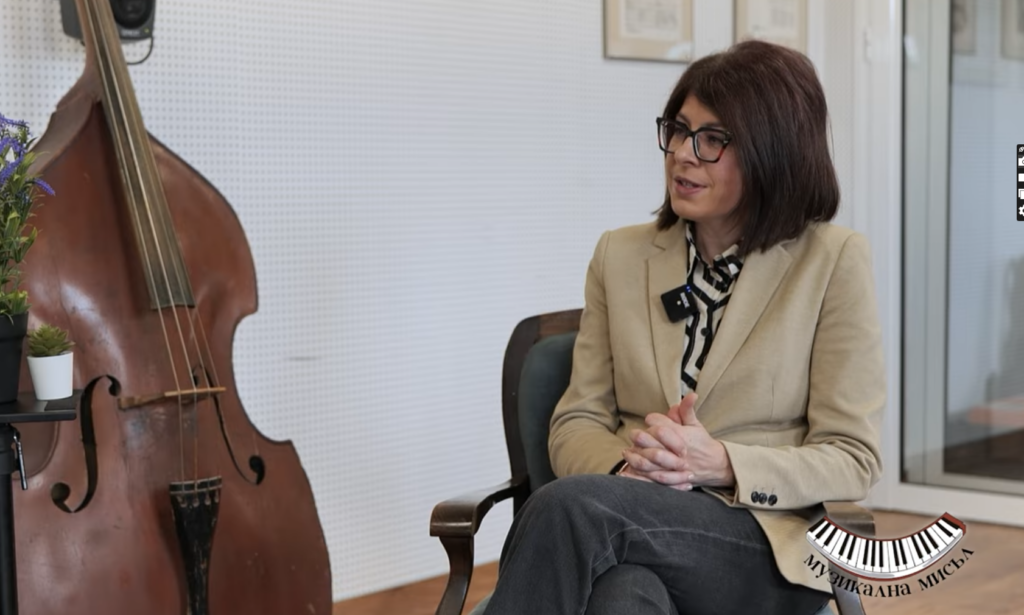
In modern education, music is often seen simply as an art form, but at BRITANICA Park School and The Castle, it is a fundamental tool for cognitive and emotional development. Our music labs, led by Dr. Emilia Kabakova, are a place where academic precision meets the magic of early childhood learning. Her approach, grounded in the innovative Orff-Schulwerk model and the Edwin Gordon Music Learning Theory, treats music as a natural language that every child already carries within them.
Why Does Music Develop the Brain?
Through active music-making, children engage both hemispheres of the brain at once – something Dr. Kabakova describes as "a fitness workout for the mind." This stimulation builds neural connections directly linked to logical thinking and future reading skills. When little ones grasp rhythmic durations through clapping or playing instruments, they're actually experiencing mathematical proportions – the concept of dividing a whole into parts becomes a game rather than an abstract theory.
One of the most valuable aspects of our approach is the integration of music and language learning. Through specific articulation exercises and breathing games, children develop remarkable sensitivity to phonemes. This phonological awareness is key to a smooth transition into literacy in first grade. The musical line also serves as a "cognitive anchor" for learning English, helping children absorb new vocabulary effortlessly and lastingly through the rhythm of a song.
Following the Reggio Emilia philosophy, knowledge in our classrooms is holistic and interdisciplinary. "If the theme is 'Journey,' we don't just sing – we board a musical train to the era of Mozart, explore the architecture of Vienna, and look into the history of instruments," explains Dr. Kabakova. In this way, music becomes a window into culture and history.
Beyond intellect, music is also an invaluable lesson in social skills. In an ensemble, every child learns to set their ego aside in service of the collective sound. Listening to others in order to achieve harmony is a high form of empathy and teamwork. For Dr. Kabakova, the greatest success is awakened curiosity – when children start seeking out musical stories in the library on their own. "A teacher must be a creator," she believes. And it is exactly this creativity that shapes our students into sensitive, thoughtful, and adaptable individuals.